Mastering the materials
Issue 304: Tools change but knowing the material does not

When it comes to Design’s role in the AI era, the headlines are dominated by taste and judgment. Though the importance is true, the discourse rarely says where they come from or how to apply it. However, there is one attribute that withstands the test of paradigm shifts and transformation: mastering the materials.
In its rawest form, design is taking material and applying a method to it, resulting in a new artifact or object never seen in this world. This is a universal truth that matters in past, present, and future regardless of technology shifts. My journey into design came from my art and art history background, and my studies were rigorous about understanding my mediums: paint of various forms, charcoal, paper, film, wood, plaster, clay, bronze, and so much more. The more time I spent with each one, the sharper my judgment about it became. Code is the material for software.
To start, you must know the properties of material. A common pitfall for designers is starting with the tools before studying the material. To master it, you must know what it can do. This is best done by observing, applying, and learning. When I was in art school, the first year of my studies was drawing with graphite and charcoal. We made many studies and figure drawings, all monochromatic. That’s right, we weren’t allowed to use color until we understood line, shape, form, texture, and value.
Focusing on these properties lets you learn the full spectrum of how it can be pushed and what factors let you manipulate it. With charcoal, we were taught the effects the different types (nitram, willow, and vine) would create based on how you hold them and whether you blend with your fingers or a smudge tool. Drawing was simple compared to my sculpture class, where we learned to make sculptures with clay, plaster, and bronze.
Once you know the properties of the material, you can shape material with tools. This is the most tactile part of the design process, because you take the material and manipulate it to your will. Through a rigorous process of attempts and iteration, the desired outcome solidifies into an object or artifact. Understanding those properties gives you higher precision in execution. Many designers click on a blend mode and cycle through every property without knowing what they actually do. To be clear, I still forget properties all the time despite being a designer for two decades. Building your understanding lets you move with clear intent.
Many of us are in the midst of learning how to design for AI. It’s critical to recognize that intelligence is the material, not ACP, MCP, and the other tools you shape it with. What’s tricky about intelligence is that it behaves like water: solid, liquid, and gas. It’s too narrow to think the final shape of intelligence is simply a chat interface or a rigid piece of UI. What makes it special is its sentience-like quality that can move from one form to another.
Master the material
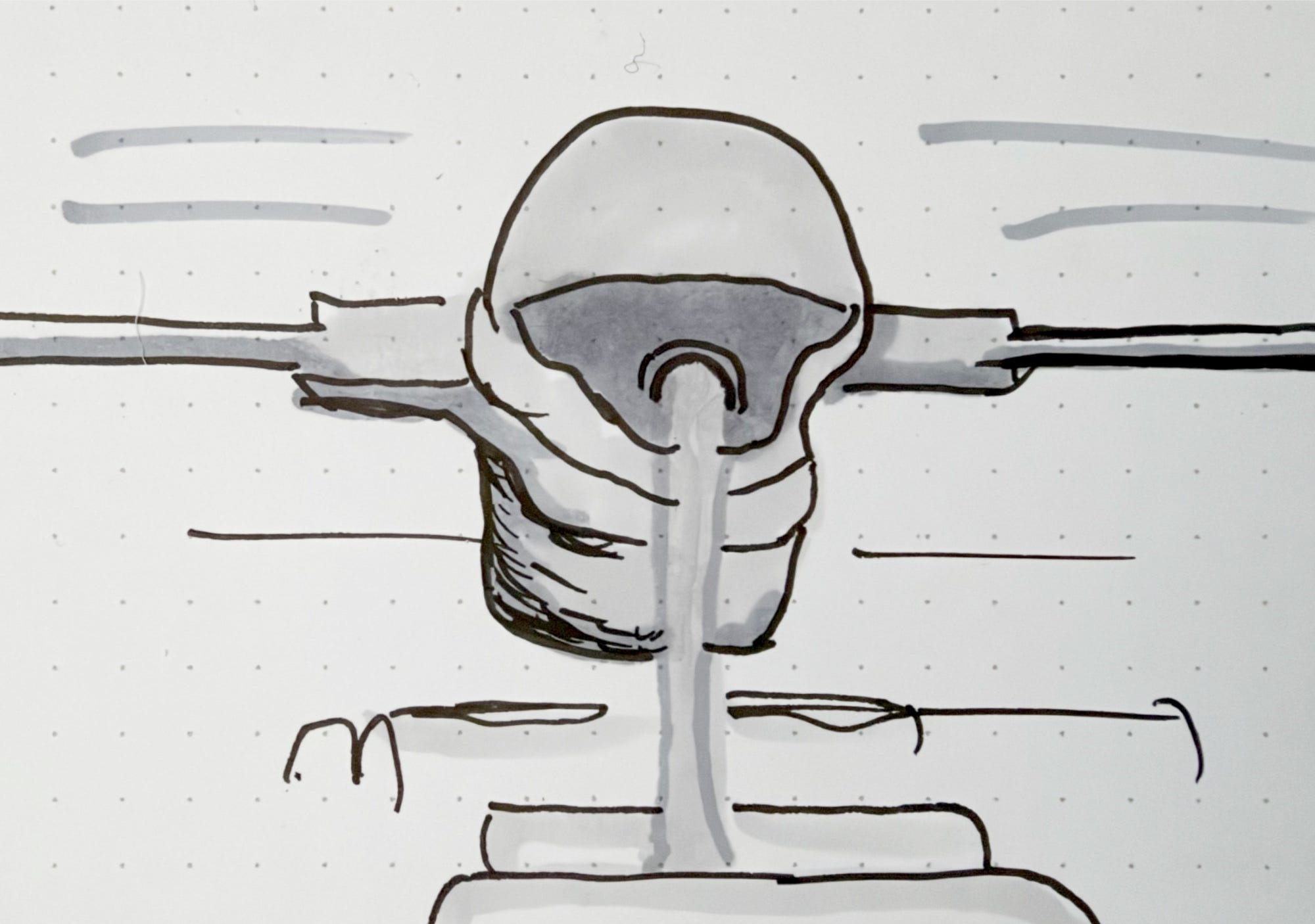
Playing with AI tools without learning the material of intelligence is like standing in a foundry with every furnace lit, pouring molten metal into a mold and praying bronze comes out. But bronze isn’t something you stumble into. It’s an alloy that’s roughly nine parts copper to one part tin; an intentional ratio. Too little tin and it stays soft. Too much and it turns brittle and cracks. Then there’s the pour itself: the metal has to be hot enough to fill every cavity before it starts to set, the mold has to be prepared to take it, and the cooling has to happen at the right pace or the whole piece is compromised from the inside. You can own every furnace, crucible, and mold in the foundry and still pull out a lump of slag, because the tools were never the hard part. Understanding what you’re working with is.
When you make software, you are still using tools to shape material. The age-old debate over whether designers should learn to code was never interesting to me, because it was mis-framed. What matters is that designers understand the material of code. Imagine how silly it sounds to ask whether a woodworker should understand the difference between pine and oak when designing a table. The Terminal and text editor have always been the tools for shaping code, and they now have new ones like agentic coding. It’s no different than being able to use a 3D printer instead of cutting prototypes from foam core with my precision cutting knife.
The materials will keep changing. The tools will keep changing. They always have. But the discipline underneath carries across every shift: studying what you’re working with until you know how it bends, where it breaks, and what it can become in your hands. Commit to mastering the material, whatever it happens to be, and you won’t only survive the AI era.
You’ll be one of the few who knows how to shape it.