Draftsmanship
Issue 296: The hand finds what the prompt misses

Draftsmanship originates from the word draught, meaning “to draw or pull.” It’s an attribute defined as the art, skill, or technique of producing drawings, plans, or sketches, particularly emphasizing high-quality, precise, and accurate representation. For design and engineering, it’s a foundational skill that is taught. However, with the speed of production increasing with AI, the declaration of design as the first casualty is making the rounds of discourse.
It couldn’t be more wrong. The people who think design is the first casualty only want the output of something they couldn’t do. Let’s look at the fast production problem and why good draftsmanship will save us. First, let’s look at the various forms of draftsmanship across various crafts.
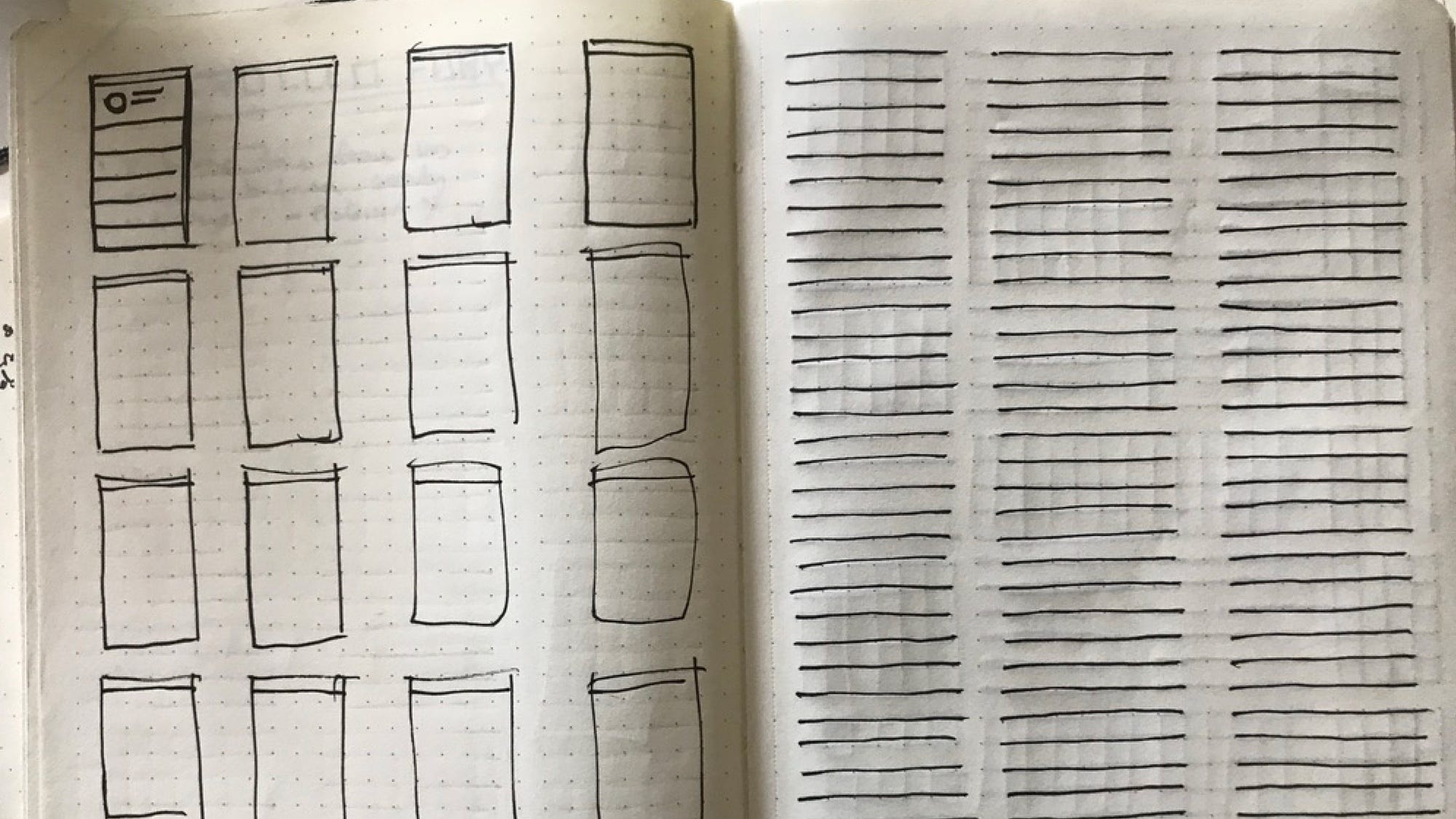
In architecture, draftsmanship comes from the section drawing and plan. It forces three-dimensional spatial thinking onto two dimensions. You can’t draw a building without understanding every single floor and detail. Industrial designers commonly use foam models along with the sketch. In game design, companies such as Valve are notorious for paper prototypes. Instead of writing any code, game developers would print out cards and make tokens to play the game. In film, iconic directors such as Ridley Scott and Stanley Kubrick drew almost every frame before shooting. Ridley Scott calls the storyboard “the first look at the film.”
When I write, I keep a longhand notebook and outline to sketch my ideas. The act of writing by hand slows down my thinking enough to find the actual argument. It’s the only counter-measure I have to agentic orchestration and the chaos of a company Slack thread. Drawing is reasoning for humans.
Good draftsmanship sharpens the craft
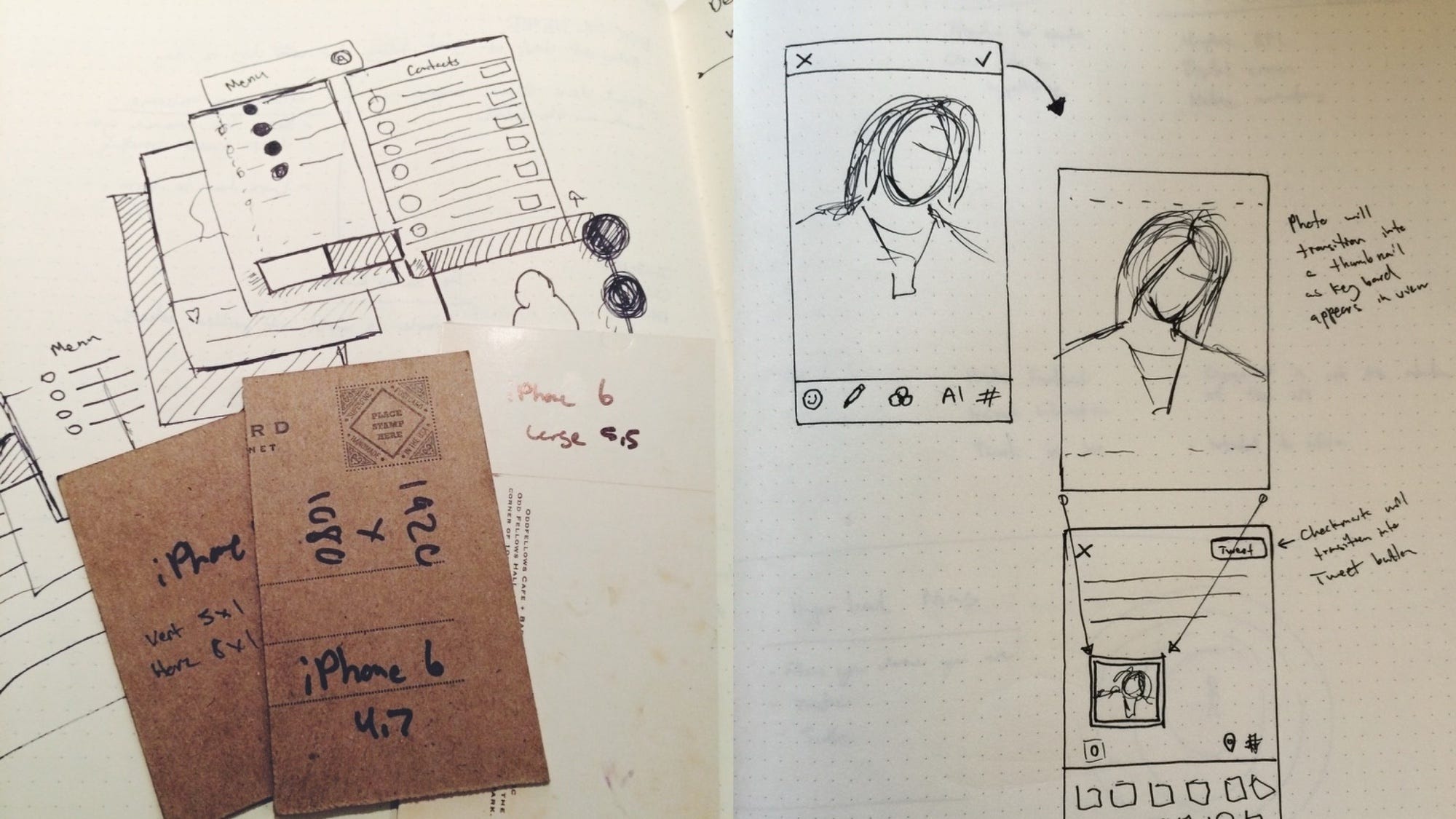
Draftsmanship develops the cognitive muscle behind the work; something a prompt can’t do for you. The first skill draftsmanship builds is diagnostic capability. Drafting is how you see problems early. You can’t catch what you never had to work through. Teams that skip the draft lose the ability to identify structural issues before they become structural problems, and by then, they’re expensive.
Then there is taste and judgment. People talk about this being a differentiator, but many spend the time to develop it. Skills aren’t a plugin or a markdown file but forged through critiquing and evaluating work. It calibrates through practice, and practice requires you to do the work.
If you start from the prompt, you’re likely curating someone else’s existing output. It’s a different cognitive relationship to the work. If you start drafting, even if you’re inspired by other ideas, you’re starting your point of ownership. If you begin with your origin point, you can communicate, defend, and explain every decisions.
The final way draftsmanship sharpens your craft is it opens serendipity. The act of working opens thoughts and ideas you otherwise might not have pursued. Great ideas throughout history spawned from the moments of feeling stuck, sketching through it, and getting to that spark of inspiration. The generative friction of drafting is where original thinking happens. If you skip it, you skip discovery.
The draft is the prompt spect
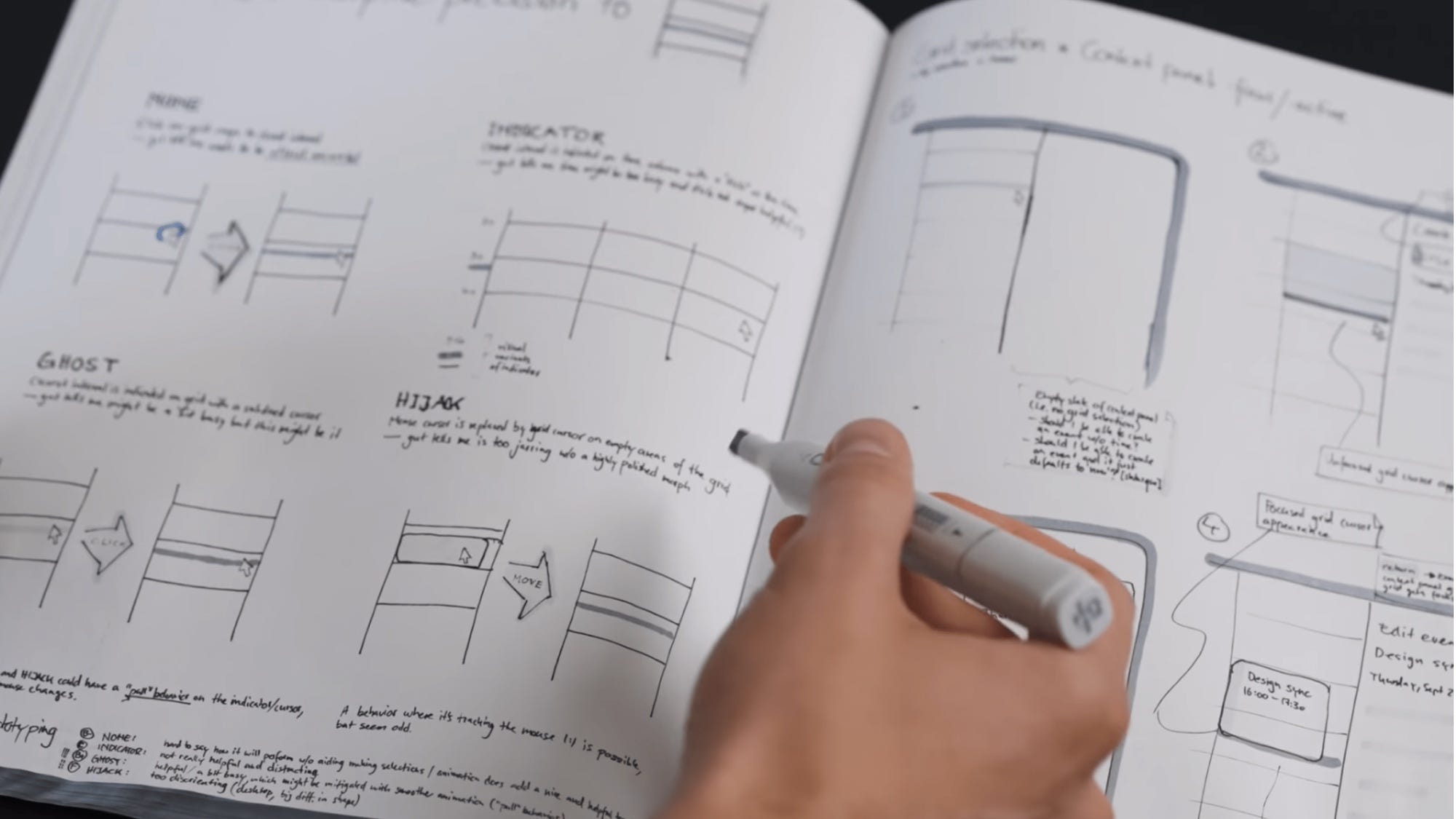
The draft is the prompt spec. And in many cases, the drawing is the literal input.
When you photograph a hand-drawn wireframe and drop it into Claude, v0, or Cursor, something interesting happens. The sketch doesn’t need to be precise — it needs to be structurally clear. A lo-fi drawing carries spatial information that a paragraph of description rarely achieves. The tool reads the intent; you supplied the thinking.
The same holds for identity work. A pencil sketch of a mark fed into an image tool captures the essential gesture of the idea in a way that words can’t. The hand found the idea. The tool built it. That’s a meaningful division of labor — but only if the hand went first.
Game designers who draw flow diagrams of their mechanics before writing rules documents get cleaner output than those who describe the system in prose. The diagram forces systems clarity. It makes the relationships between components explicit in a way that language tends to obscure. An LLM reading a well-drawn game loop diagram produces better rules text than one reading a well-written description of the same loop.
The same logic applies to data modeling. A whiteboard Entity Relationship Diagram photographed and prompted into a schema produces cleaner architecture than a described one. Engineers who draft their data models by hand before prompting consistently produce better output — because the drawing resolved the ambiguity before the tool had to guess at it.
Storyboard frames as reference images for video generation. Rough floor plans fed into Vizcom or Spline for spatial exploration. In each case the drawing sets the structural intent and the tool handles execution. The sketch is not a precursor to the real work. It is the spec.
Drafting is the rapid alignment tool
As the speed of execution increases, the risk of team misalignment also does. Drafting is the rapid alignment tool to ensure teams are building the same thing. Before a building goes up, everyone looks at the same drawing. The blueprint is what makes collective thinking possible because it’s a shared artifact between architect, engineer, the contractor, and client; all reacting to the same thing. The drawing makes disagreements visible before they’re structural. You can argue about a line on paper. You can’t argue about a poured foundation.
When teams skip the draft blueprints, everyone has a different alignment assumption in their mind. There is nothing to mark up together. Prompt responses don’t create that moment as it arrives too complete and polished for real interrogation. As a result, teams feel it’s pointless to debate something already built. The conversation the sketch would have resolved that.
I’ve seen this in product work. The wireframe artifact that reveals two people had completely different mental models of the same feature. The whiteboard data model where the flaw in the architecture becomes obvious to everyone in the room at the same time. The paper prototype that exposes the broken mechanic before anyone wrote a line of code. These aren’t slow moments. They’re the moments that prevent the expensive ones.
AI is very good at accelerating individual output. It has no native mechanism for what happens when a team gathers around a drawing. The sketch does that. Lo-fi, unfinished, open — it holds the space for collective thinking in a way that a finished output never can.
The teams that draft together stay coherent as speed increases around them. Not because they’re slower. Because they’re looking at the same drawing.
Think before you generate
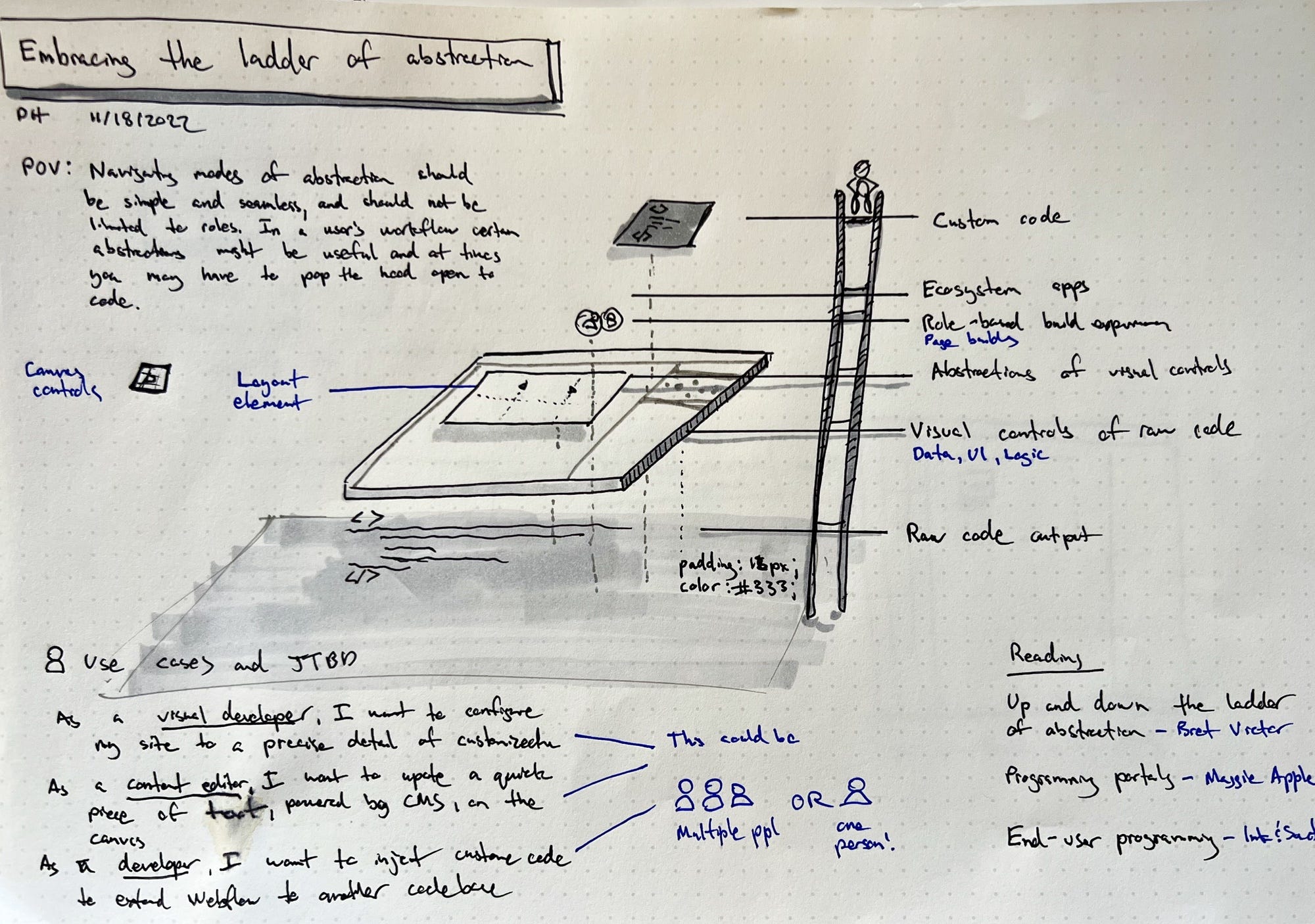
The best use of AI is as a collaborator after you’ve drafted. Your thinking goes in, sharper output comes out. The tool earns its place in the process because the process was real. Most people prompt before they’ve thought and accept the result as thinking. The blank page gets filled, the build gets faster, and what’s lost is invisible — the cognitive work that would have made the output good, the diagnostic pass that would have caught the problem early, the shared drawing that would have kept the team pointed at the same thing.
Draftsmanship was never about producing artifacts. It was about producing understanding. The drawing was how you found the idea, stress-tested it, and brought other people into it. That hasn’t changed. What’s changed is how easy it is to skip it.
I still keep the notebook. I still sketch before I build. Not because I’m resistant to the tools — I use them constantly — but because the thinking I do on paper shows up in the work in ways I can’t fully replicate by prompting alone. The drawing finds things what you miss to prompt.
Keep draftsmanship sacred.