
The first hour of work
Issue 301: Setting the daily tempo

The work schedule used to bully me endlessly. Every day I’d wake up already overwhelmed, thinking about what was waiting in the inbox. Digital work is infinite in its scrolling, its notifications, its channels all screaming for attention. Before you can do anything productive, you’re behind on the 72-message Slack threads where everyone and everything is vying for a piece of you. It’s closer to the floor of a Vegas casino than a place to do your best work: engineered to keep you reacting, never letting you settle.
Makers and builders need time to focus. This is where the first hour of work comes in. How you set the tone determines whether you spend the day fighting thankless fires or doing intentional work.
Sophia Leroy’s research on attention residue explains why switching tasks leaves part of your attention behind. Every time you jump from one thing to the next, a piece of your focus stays stuck on what you just left. As the day progresses and more things compete for you, that residue accumulates, and the attention you can actually bring to any single task erodes.
An hour of intention
If the first voice you hear is the inbox, you’re not starting the day right. Set the first hour aside before you begin tackling tasks. It’s the work before the work. A clear intention in that hour lets you control the momentum instead of inheriting someone else’s.
In baseball, there’s a move called the lead off. A runner on base takes a few steps off the bag in anticipation of the hitter making contact, ready to break for the next base. Sometimes they go further and steal it outright, beating the defense to the bag before the play even develops. The point of the lead off is that you’re already moving before the situation forces you to.
What matters most to push forward?
What needs to get done?
What can wait?
Of the three, what matters most to push forward is essential because your vital few priorities likely are never done. Conserve time to work on those before getting to the checklist. Rituals matter, but they aren’t the driver of intention. They’re reflective and contemplative, and I do mine beforehand. My morning walk, coffee, and journaling are essential, but they aren’t the first hour of work and come before that. Now you’re seeing why I am awake several hours before starting work.
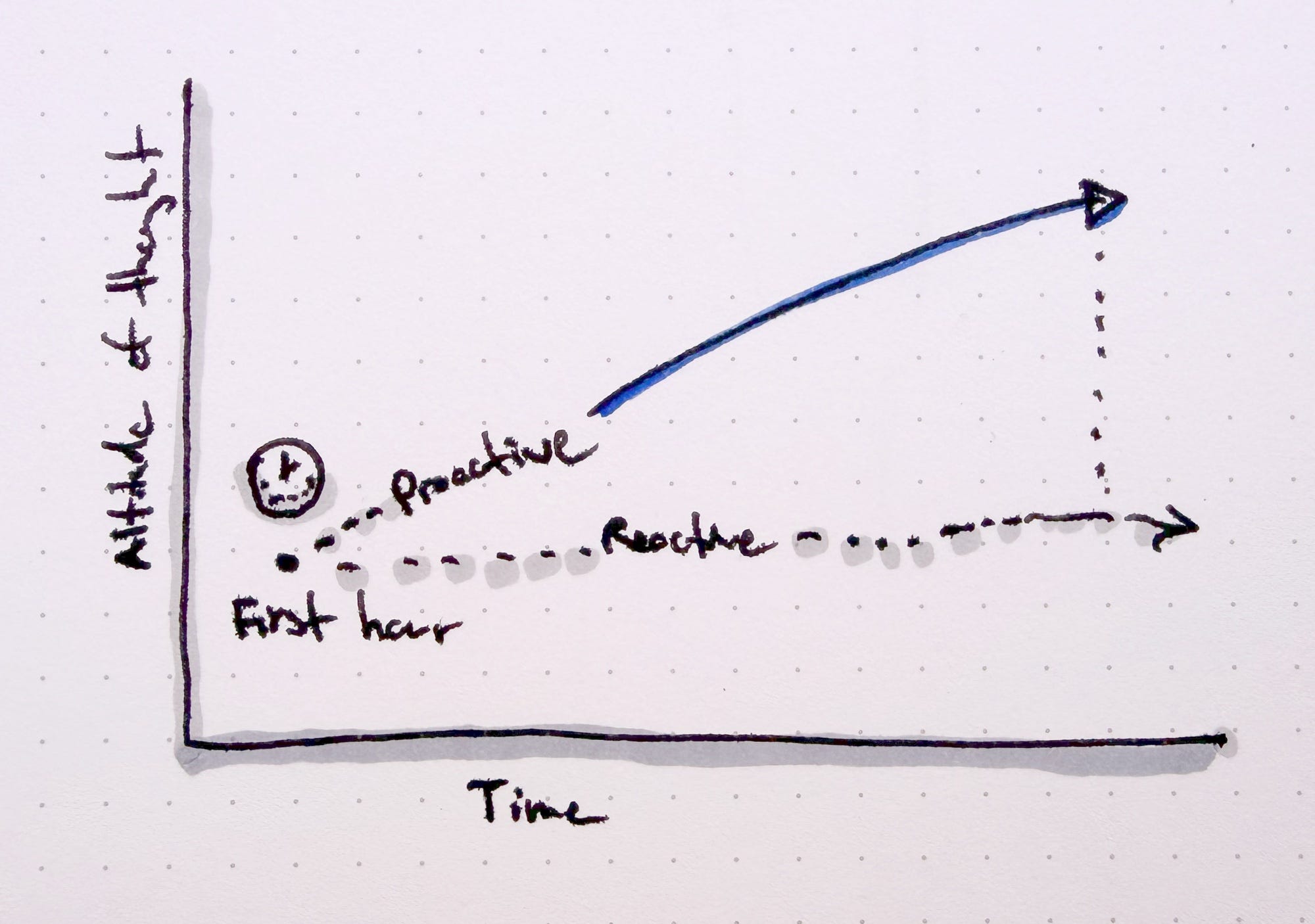
What to avoid
The goal of the first hour is to stay proactive. Avoid lapsing into a reactive state and being at the mercy of your calendar and the Slack messengers. Avoid:
Check email or Slack
Do not start by asking “what do I feel like doing?”
Administrative tasks
The last one is the most dangerous, because it’s the most convincing. Clearing small tasks feels like accomplishment, but it’s not progress to what matters. These things need to get done, but don’t use your valuable headspace to set the tone of the day to do that.
Compounding the focus
I’ve told you what to avoid, so let’s talk about focus. The first hour is about having a proactive day, but it also compounds over time. I don’t work from a backlog in the first hour. I ask myself one question: “What are the three most important things I need to make progress on in the next five years?” Though the timeframe is just a proxy to frame the ambition, it’s a good forcing function to choose work that matters most to make progress.
Here’s how that tends to look day to day:
Working on the most vital initiatives that lead to outcomes at work
Writing for my publication
Fostering long-term relationships that matter most
Designing or coding the project I’ve wanted to build
The most important aspects of your work don’t have deadlines screaming at you. However, they are eroded by the noise of other things vying for your attention. They’re the things that quietly get crowded out unless I protect the time for them, and they’re also the things that determine where I’ll be in five years.
First hour, first move
The first hour may seem like a small thing, but done daily for years, the value compounds. You’ll feel more prepared and more proactive, pushing your work instead of getting pulled by it. Don’t let what you have to do dictate how you approach what you do.
Work can be never-ending. But if you build systems that let you control the terms of how it gets done, it becomes more fulfilling and more fun. That’s why the first hour is crucial. It’s the one hour you own outright, and everything else compounds from there.