
The craft of speaking
Issue 303: Delivering on a message that sparks someone

Public speaking is one of two categories: cringe or craft. I believe when speaking is the latter with the right intention, the message transcends generations and can spark a person in the audience onto an entirely new trajectory.
In 2012 at the Canadian University Software Engineering Conference (CUSEC), held at the Delta Centre-Ville hotel in Montréal, Québec, Bret Victor gave a talk called “Inventing on Principle,” arguing that creators should first discover a deeply held moral principle, then let that principle ruthlessly guide what they choose to invent and how they design their tools. Unbeknownst to Victor, the talk in that hotel conference room inspired many people, both in the room and those who watched it later online. It moved Vlad Magdalin, co-founder of Webflow, to leave his job at Intuit and build the visual development platform. Nathan Daly felt the same pull as he built LiveIDE.
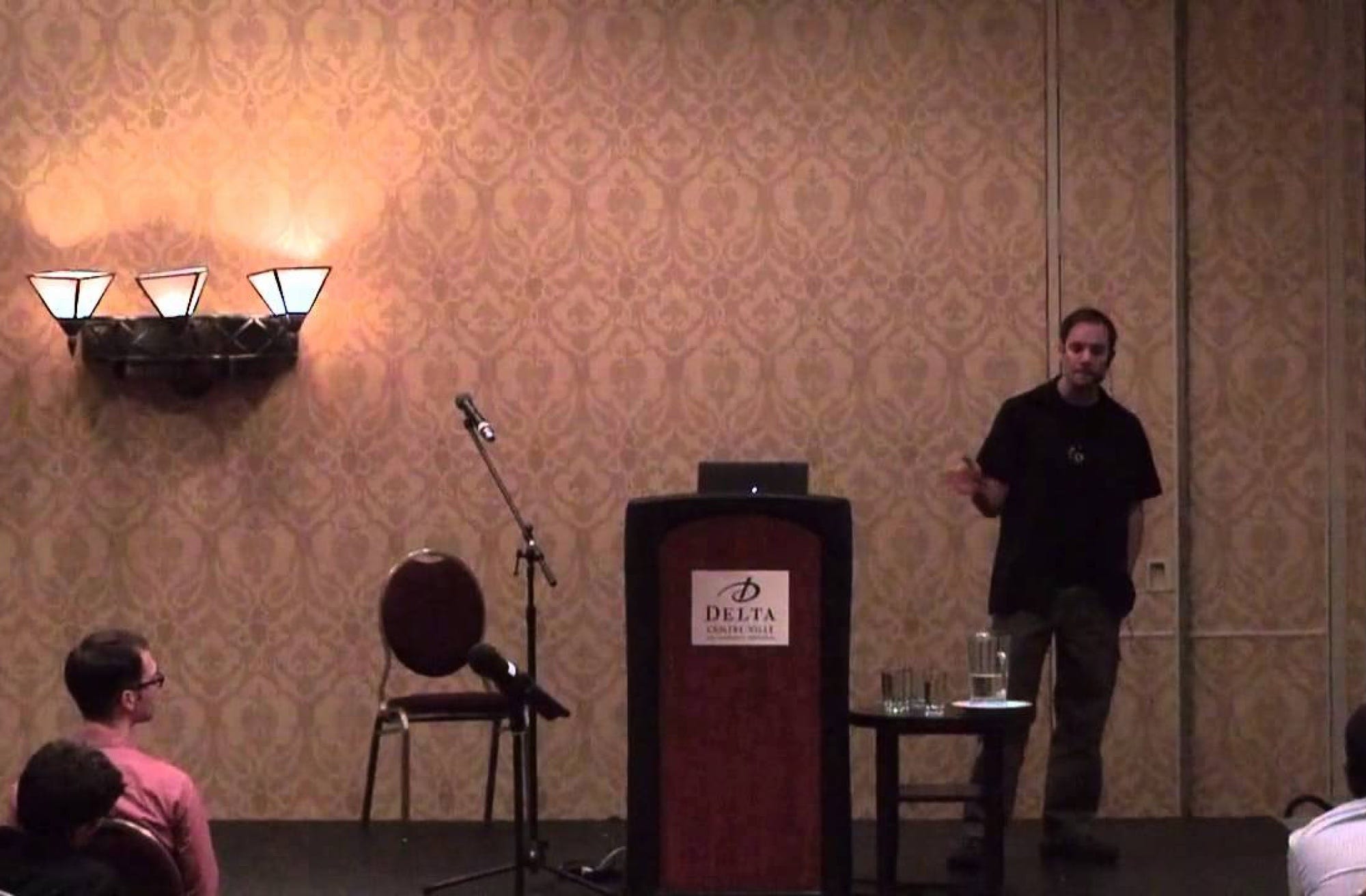
Victor’s talk has propelled my career inspiration for the past 14 years since he delivered the message in that darkly lit hotel conference room. That’s what public speaking should be about: delivering a message that will spark inspiration for the audience in a meaningful way.
The pillars of speaking
Pillar 1: Set intention and expectations
There is no speaking intro more clear than Mandy Patinkin in The Princess Bride: “Hello. My name is Inigo Montoya. You killed my father. Prepare to die.” In one breath you know who he is, what he wants, and exactly where this is going. The audience can settle in because the agenda is set.
Give your audience that same certainty early. Tell them what you’re going to cover and why it matters to them, then deliver on it. When people know the destination, they stop guessing where you’re headed and start following the argument. A clear agenda also buys you patience. If a section runs long or a point takes a moment to land, the audience stays with you because they trust you know where this is going. Ambiguity is what loses a room, so resolve it in the first minute.
Pillar 2: Make the audience is the hero
It’s off-putting when you hear a talk and the speaker is at the service of themselves. Though the audience may come to hear you speak, your goal is to make what you say relatable so they can become the hero of their own story.
One of the ways to put the audience in the focus is to put the mirror in front of them. Look for reflective questions or moments where they can pause, listen to what you’re saying, and take back what it means to them.
Pillar 3: Make any subject personable
People often hesitate to give a talk because of the sheer volume of noise around their subject. I remember one of my designers telling me she wanted to write and speak more, but felt there was too much already said about her topic. Though that may be true, the best way to differentiate any subject you’re speaking about is to find your unique view on it. Plenty of people have talked about growth design, but your specific experience and what you learned from it is something the audience is hearing for the first time.
Pillar 4: Inspiring call to action
Your call to action should be better than “Thanks for coming to my talk! Any questions?” Give the audience a rally cry tied to the message you’re delivering. It might compel people to sit with a deep problem. It might change how they approach the craft. Whatever it is, make it clear and memorable. The strongest endings give people language they can reuse: a phrase, a challenge, a question, or a new lens. The talk is over when the audience knows what to do with it.

Common pitfalls of public speaking
These days, I spend more of my time coaching people public speaking than doing it myself. Giving a talk is one of the most nerve-wracking things someone can do, so it takes a lot of practice. I’ll share a few common pitfalls in talks I’ve personally done myself and observed as people are developing their craft of speaking.
Pitfall 1: Starting with slides over narrative
People, designers especially, have a natural tendency to start constructing the artifact before getting to the substance of the outcome. The common mistake I see is people duplicating a corporate slide template or jumping straight into building the deck. Doing that immediately boxes in the potential of your message. Storyboard the talk first. Figure out the points you want to land, rehearse them out loud, and only then construct the slides to support what you’re saying. Your slides should support the talk, not compete with it.
Pitfall 2: Long-winded intros
Don’t burn your precious time speaking doing an intro about yourself. If you do one, keep it brief. The truth is most people already know who you are when you’re speaking or had a touchpoint where they already know your credentials. If you do an intro, make it additive to that and not repetitive.
Instead of reciting your resume, open with something that earns the audience’s attention. Start with a question or a tension by posing the problem you’re going to spend the talk resolving, which puts the audience in the right frame before you’ve said a word about yourself. You can also open with a story or a moment, dropping people into a specific scene that sets up your message so they learn who you are through how you tell it. If you do need to establish credibility, do it in one line. Rather than listing every role you’ve held, name the single piece of experience that gives you the right to talk about this topic, then move on. And whatever you open with, state the promise early by telling them what they’ll walk away with, because a clear payoff is more compelling than a biography.
The fastest way to establish authority is to say something useful in the first thirty seconds. Let the substance of your talk prove who you are.
Pitfall 3: Speed talking
Whether it’s the nerves or the worry about running out of time, I’ve noticed people starting their speaking journey talk way too fast. If you catch yourself rushing, lean on the pause. A pause is not empty space; it is where the audience catches up to you. It always feels longer to the speaker than it does to the room. The pause feels longer to you than it does to the audience. Keep your pacing as epic as the 1987 Predator movie; a masterful slow burn of suspense while keeping the audience engaged every step of the way.
Pitfall 4: Calling out your own mistakes
As Scott Berkun says, “most mistakes are invisible.” If you see a typo on your slide, don’t say, “Oh, sorry about the typo.” You likely called attention to a mistake nobody saw, but now everybody sees it because you raised it. Even though it’s difficult, resist the urge and let the mistake flow. Once you’re live or on stage, you can’t fix it and iterate after the fact. Remember that the audience is rooting for you more than you think.
Say something that matters
I had no interest in public speaking for the longest time. My perspective changed when a mentor of mine once encouraged me to use it as a means to deliver a message to many people instead of thinking about it as me giving a talk. That helped me de-center myself and focus on the value of what is delivered instead of who is delivering it.
The craft of speaking should be about something that you care deeply about. If there is a topic you keep returning to, an idea you defend in conversations, a problem you wish more people understood, that is your talk. The world is full of forgettable presentations. What it needs are voices from people who care deeply about something. Someone in that audience is waiting for exactly what only you can say. The goal is not to be impressive but to be useful in public.
Hyperlinks + notes
Scott Berkun, “Confessions of a Public Speaker” → Highly recommend this book if you want to pursue the craft of speaking
RIP Joshua Baer → So tragic