
Staying creative during travel
Lean tools, hard constraints, better ideas

I’ve written about mobile setups, my travel work setup, and other posts about working on the go. As I embark on a trip around the world (literally from Sydney, Singapore, Amsterdam, and back to California), I figured it’s time to write about creative work while traveling again.
Habits away from home
Traveling forces you to re-wire what you’re thinking about. You’re away from home, loved ones, and common routines.
Travel also changes your relationship to constraints. In a new place you might not have your usual tools, language, or routines. You improvise—gesturing instead of speaking, sketching instead of writing, using whatever’s at hand. That improvisation trains you to see limitations as prompts rather than barriers, which often leads to more original ideas.
Invoke boredom, let the mind wander
Boredom is one of the most important mental states for creative work. You need time to empty the mind and let it wander a bit. When I’m flying international, I intentionally don’t connect to wifi. No email or online frontier models; just my sketchbook and whatever I stored offline on my iPad. Only these hard constraints will force new perspectives.
If you’ve ever traveled with Starlink wifi, it’s amazing. The internet speed is faster than the bandwidth I get at home in Palm Springs. But I’d abstain from it. High bandwidth on a plane produces the same thinking as the home office. Without wifi, I ended up watching TV shows and movies only available on my iPad. During this flight to Sydney, I watched every Bruce Lee movie, which inspired me to write about applying Jeet Kune Do to running design orgs and my creative practice.
Though I could inevitably get there, there’s a low chance I would have arrived at that article idea sitting at home. When you’re on the road, let your mind wander to generate new directions.
“Capture or create” method
Travel creates heavy constraints on time, and you have very little of it. You don’t have the luxury of hours at your desk or studio. Unless you’re traveling explicitly for a creative retreat, creative work is secondary to your personal vacation or work trip. With so little time, you have to make the most of it. This is where “capture or create” becomes an important discipline. Forcing the contrast helps you be more effective with what you bring.
Capture mode
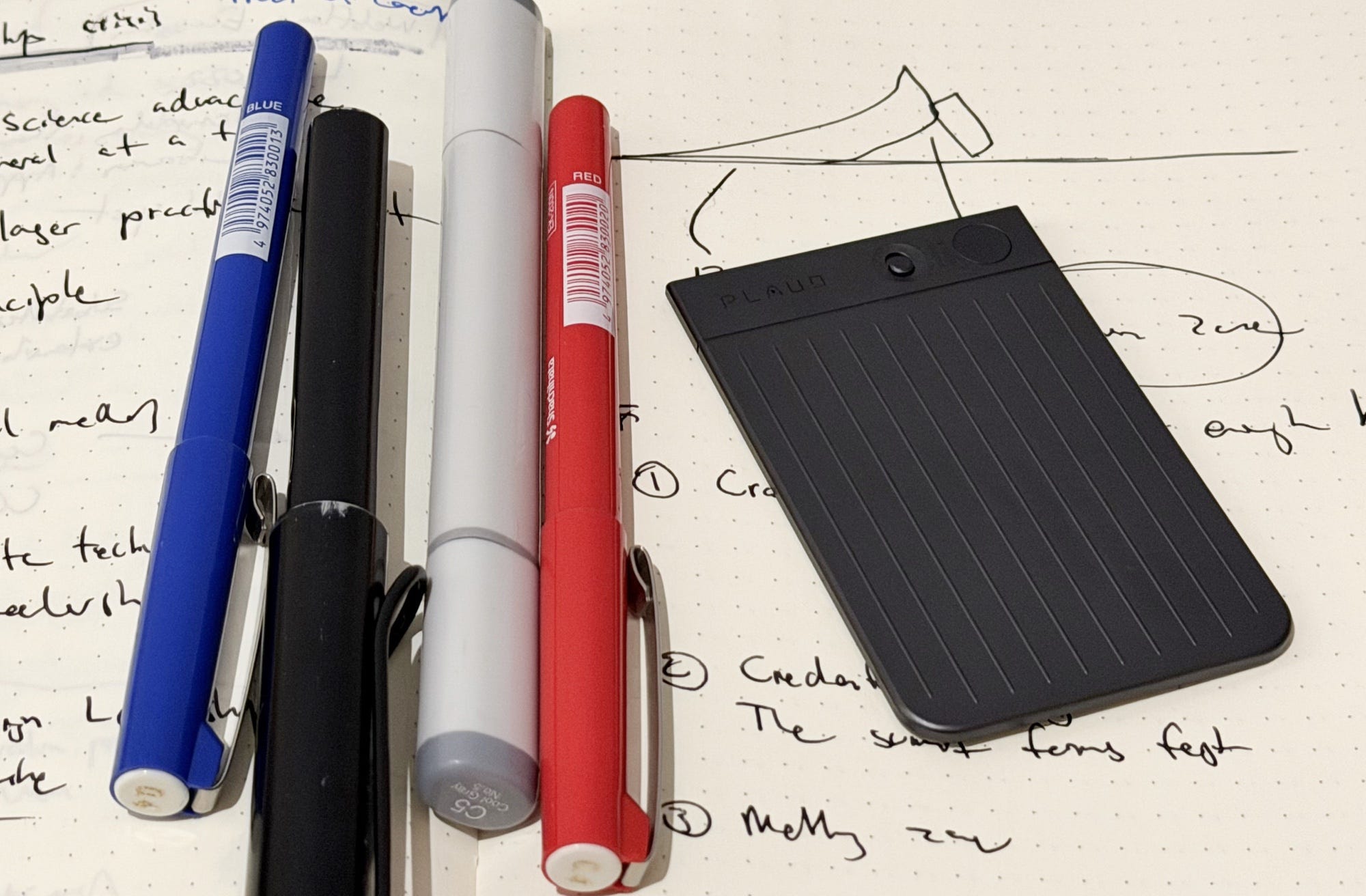
Capturing requires smaller equipment than your work or personal laptop. I carry three tools when I’m focused on capturing: my phone, sketchbook, and AI note taker device.
Though I love my Ricoh GRIII, my phone does the trick for photos, video, or scanning my sketches. My sketchbook is old faithful; the Leuchtturm1917 notebook. Despite many attempts at sketching with an iPad or e-ink tablet, the non-electronic notebook helps me completely disconnect. Finally, I recently picked up a Plaud AI note taker. I’m not a meeting recorder—AI summaries don’t work for me—but I do find value in a tool to capture voice recordings of ideas as they happen.
As I’m capturing, my team of AI agents synthesizes everything into my LLM Wiki. The work shapes up while I’m on the go.
Create mode
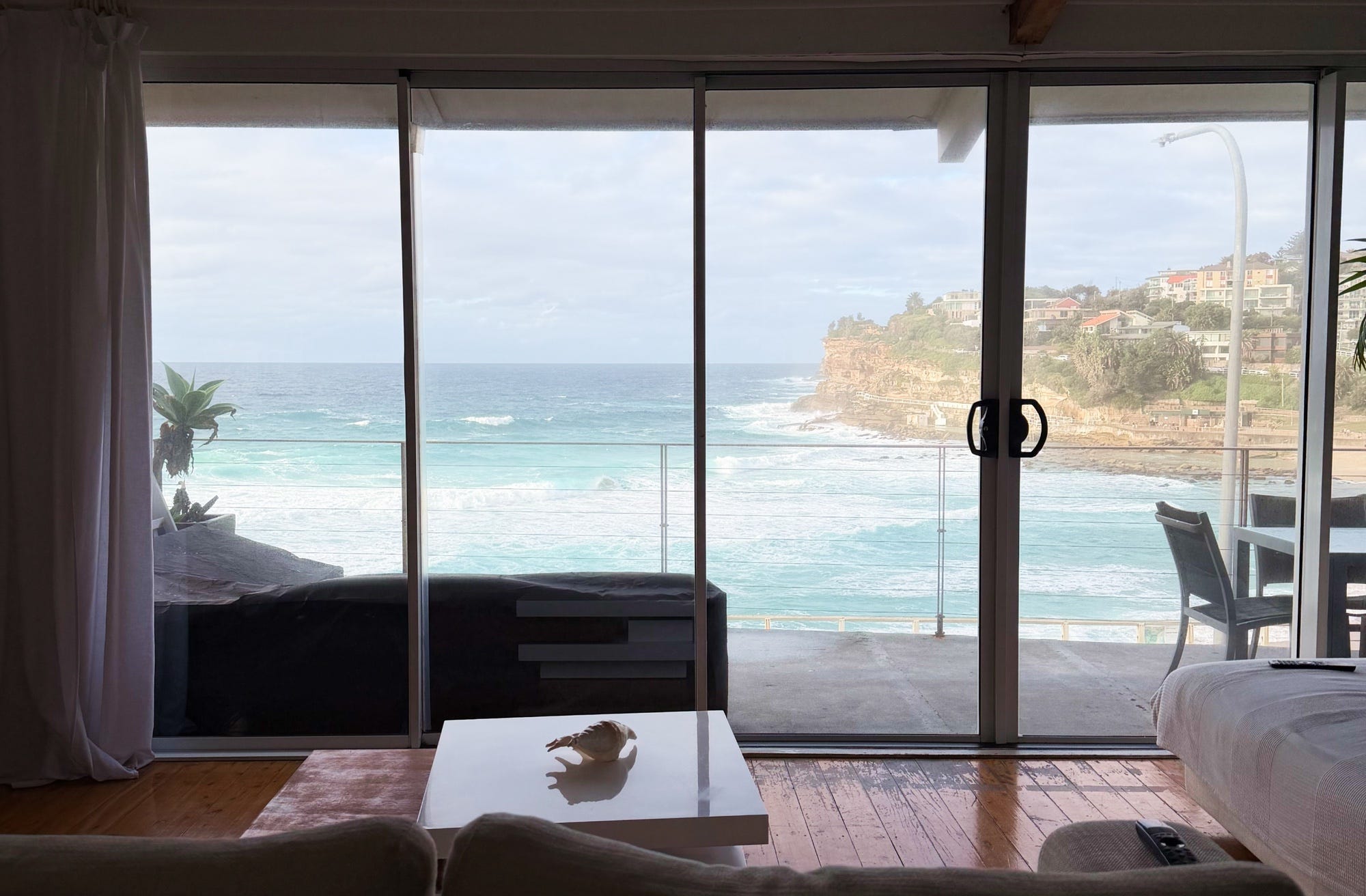
This is the sacred time when traveling. You need to create pockets of time where you can focus to write, design, code, and do other creative work. When I’m in Sydney, this might mean stopping by Georgie Boy’s Coffee or Regiment before heading to the office, or co-working with friends at Cafe 143 in Bronte Beach.
Unsurprising to regular readers, my go-to creating device is the 11” iPad Pro. Space and weight are critical when traveling, even during creating time. The iPad Pro gives me access to the workflows that matter. It’s the entertainment device that invokes the boredom—the same one that let me binge every Bruce Lee movie1. Consolidating entertainment with work saves a lot of room. It’s also a great Mobile Device Management device that lets me check on work without lugging my work laptop. And with Astropad’s Workbench, I can remotely connect to my Mac mini and laptops, getting the power of code generation without the heavy machines. Truly a three-in-one device.
Closing
The point isn’t to replicate your home setup on the road. It’s to use the friction of travel as a creative input. Boredom on a plane, constraints in your bag, the unfamiliar coffee shop in a city you don’t live in—these are the conditions that produce ideas you wouldn’t have had otherwise. Capture or create gives you a frame for using the small windows of time you do get, but the real shift is treating travel itself as part of the practice rather than an interruption to it. The sketchbook gets thicker, the wiki gets denser, and by the time you’re back home, you’re carrying material that home alone couldn’t have generated.
Hyperlinks + notes
I’ll be in Amsterdam this week for I’ll be speaking at Hatch Conference’s Leadership Ateliers
The Future of Design Tools, AI Strategy and Workflow Transformation with David Hoang | Building Iconic
How structured thinking gives your AI superpowers → Get ready for Carola Pescio Canale’s talk at Config
Proof of Concept 42 - Quick Capture to Maximize Actionability
Man, Enter the Dragon is so good