
Escape from agentic loop
Issue 297: Human-in-the-Loop is the new doom scrolling

I’ve been using agents a lot this year, and it’s incredible how powerful they’ve become. It started last winter break when everyone was using Claude Code. All of the sudden, I’m using Claude Code, Codex, Gemini, Cursor, Replit, Rovo Dev, and of course, OpenClaw. My focused habits went from one screen and one window to look at to a dozen Terminal windows managing my agents like I was playing StarCraft II.
Here’s the truth. It’s a lot of fun. It’s exhilarating to see the agents thinking and co-building with them. It feels like a productive high instead of doom scrolling social media, but it has similar effects. I remember going to a dinner with friends. Over an incredible omakase meal, we all naturally took a bit of a break to check our phones. It wasn’t a social media break. It was an agent orchestration break.
It’s a lot of fun, but it’s exhausting. Ironically, as the agents are thinking, I found myself having less time to think. This is where I changed my toolchain in hopes to get time back. Before I jump in, let’s elaborate on what Human in the Loop (HITL) and Human on the Loop (HOTL) are, what the difference in the methodologies are, and examples of how I’m changing my schedule and rituals to get more focus time all the while building with agents.
Human in and on the loop
Human-in-the-loop (HITL) means the system cannot proceed without you. The human is a gate in the causal chain. You approve every draft and proposal. The agent waits for a response and won’t do anything until the human inputs something. The term traces back to flight simulation and was adopted by the Department of Defense in 2012 to describe semi-autonomous weapons that could not engage a target without human authorization.
Human-on-the-loop (HOTL) means the system runs on its own and the human supervises. You watch the dashboard, you check the alerts, you sample the work, you intervene when something looks wrong. The classic example is a Phalanx air defense system that can engage an incoming missile faster than any human could authorize the shot; a person is on the loop, not in it, because the speed of the engagement makes a true gate impossible.
I know. We went from missile defense to your Tuesday afternoon pretty quickly. The vocabulary comes from a domain where the stakes are absolute, which is exactly why it is useful for thinking about everyday AI work — it forces you to be specific about where the human actually sits, instead of waving at “oversight” and hoping it counts. Stanford HAI reframed all of this for AI design as a Human-Computer Interaction problem rather than an automation problem, which is the right move. The checkpoints and considerations carry over. The stakes are different. You are not authorizing a strike. You are deciding whether to approve a pull request, ship a draft, or let an agent reorganize your inbox. The framework still asks the same question: what is the human doing here, and is that the right place for them to be.
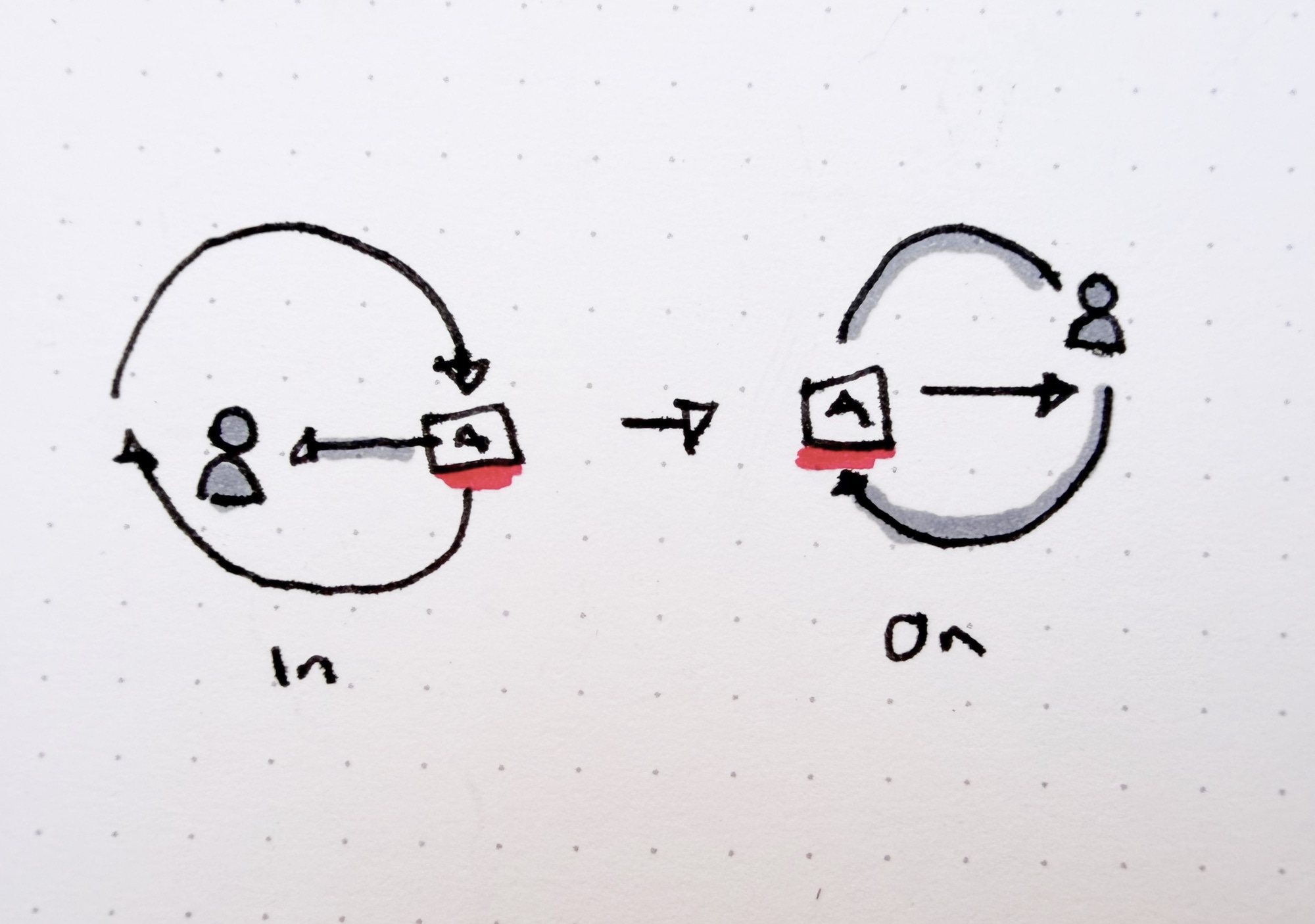
The agentic equivalent of doom scrolling
At times, HITL agent orchestration feels addictive like Candy Crush or scrolling social media. Every prompt shows a stream of tokens and visible progress being made. You sit and wait to hit the number 2 or continue prompting. Instead of doom scrolling, you’re doom building; a sense of productivity which leaves you not doing anything else.
To be abundantly clear, I’m not against HITL and it’s a great way to build. What I’m saying is the massive productivity gains take a toll on you. I’ve shipped real work this way; being locked in for entire afternoons and evenings to prompt sessions. Sometimes I get good outputs and other times I don’t get anything valuable.
The orchestration tax is like the coordination tax at work. I’m feeling like I’m building but really air traffic controlling in parallel. You are reading partial outputs, deciding which to merge, which to discard, which to re-prompt. It’s a job, and an important one, but it’s not the deep work in design, writing, or thinking I need to do.
That is a real job. It is not, however, the same job as design or writing or thinking. It uses a different part of you and it depletes a different reservoir. By the time I sit down to actually draw something or write a paragraph that matters, the reservoir is empty.
I orchestrated my way out of having anything to say.
Agentic manager and maker schedule
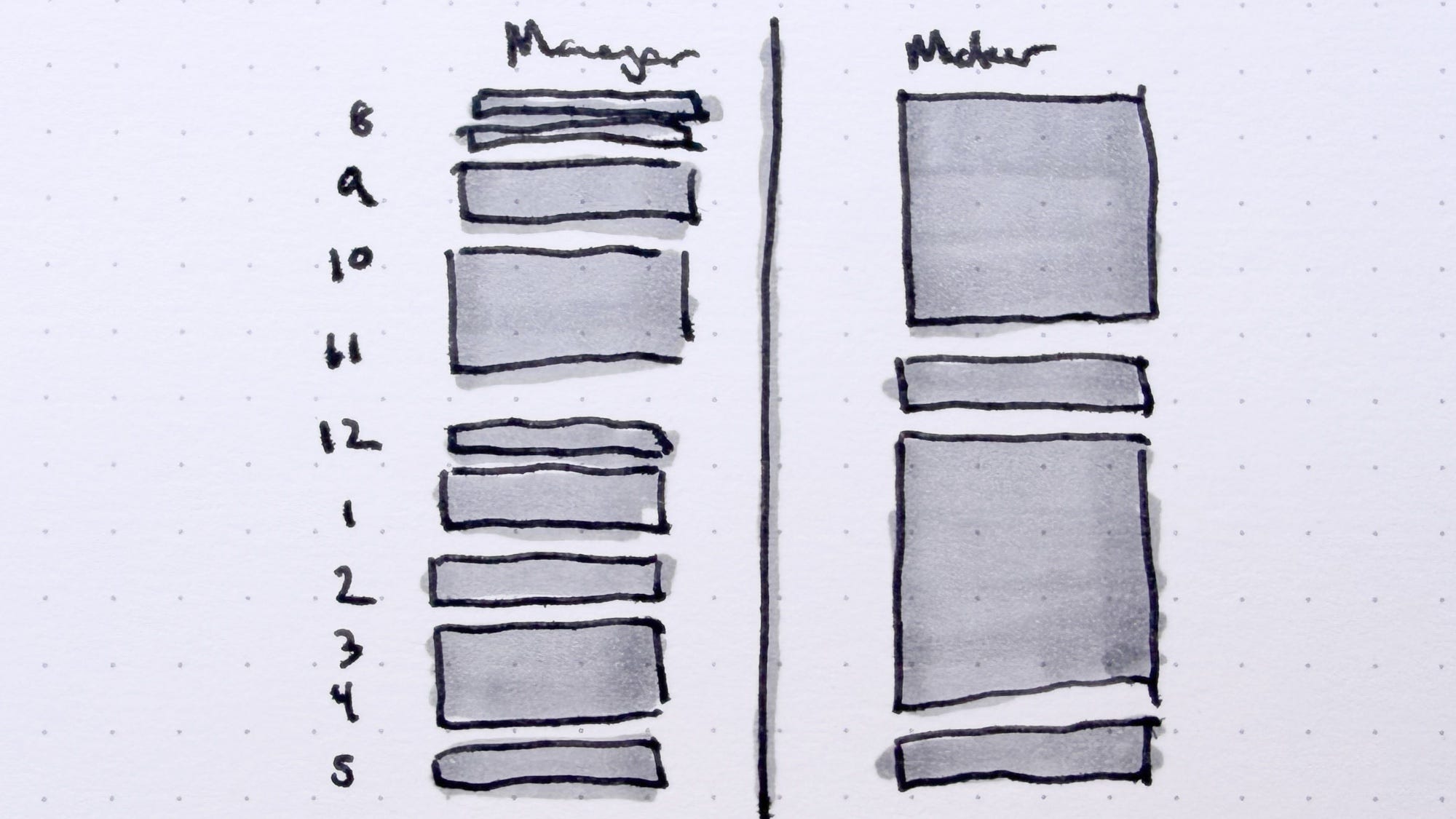
Paul Graham has an infamous blog post about Maker Schedule vs. Manager Schedule. With agents, I’m doing both and it’s important to re-design my schedule around it. I need time for deep thinking and work with limited distractions; HITL agent orchestration is the opposite of that. This is when I change my agent workflow to foster HOTL as much as possible.
I set up Ren Talon, my OpenClaw, as a local orchestrator agent: one conversational front door that can route work to specialized sidecar agents for writing, creative exploration, personal assistance, Australian context, and knowledge work1. Each sidecar has its own workspace, memory, skills, and permissions, so Ren can delegate without blending contexts or leaking sensitive information across domains. The result is a small multi-agent operating system running on my own hardware. Ren handles intake from chat and tools, decides which agent should think through the work, then reviews and composes the response before anything goes back to me, Trello, Discord, Obsidian, or eventually Jira.
Human-on-the-loop only works if the supervision is real. Human Rights Watch made this point about weapons systems and it is just as true for knowledge work: a person who is technically on the loop but is supervising a dozen autonomous systems at once is, functionally, out of the loop.
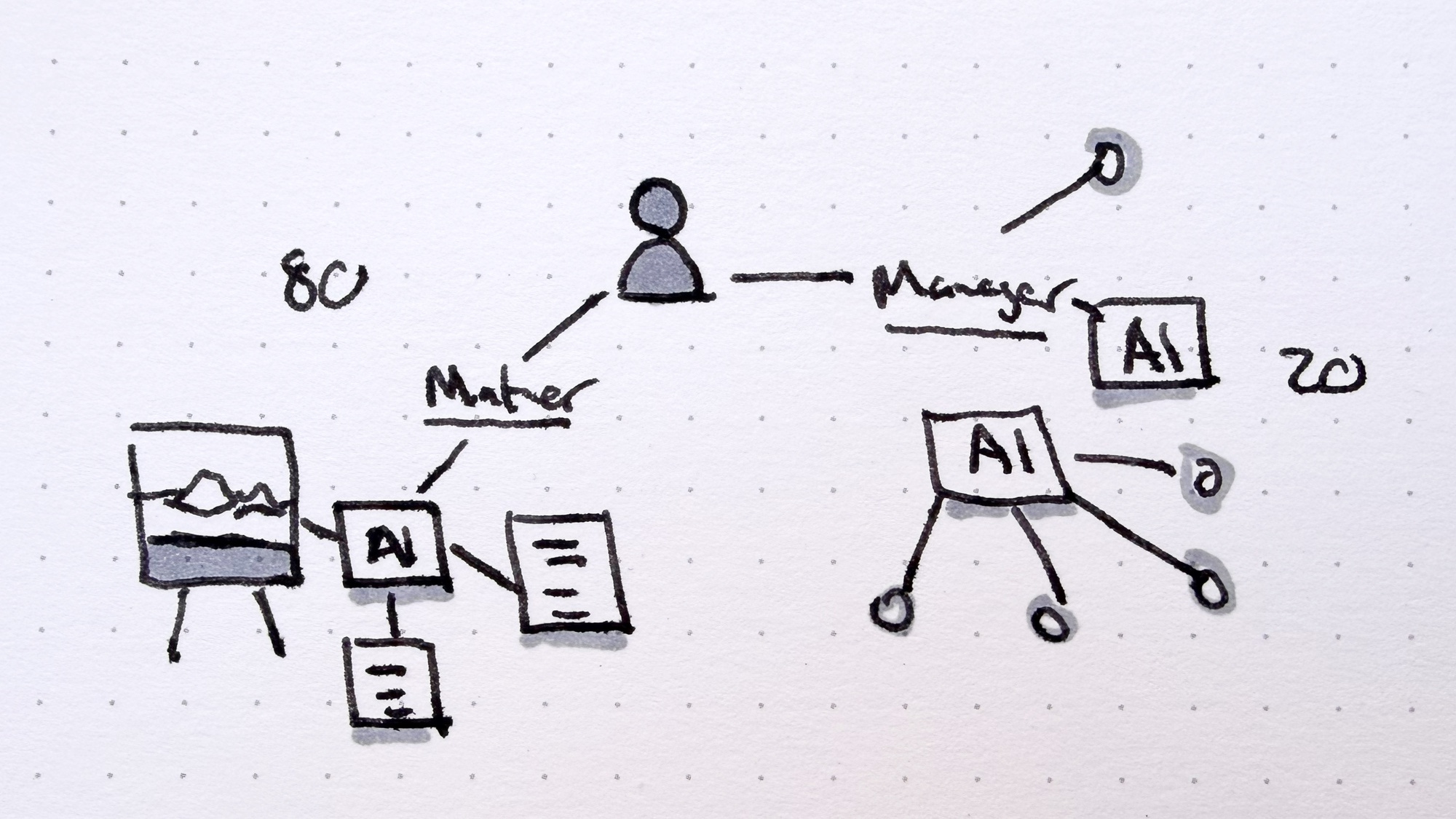
If I am going to delegate project management to an agent, I need a real review cadence; a time on the calendar where I actually look at the work.
This is the agentic manager schedule.
Here is what that looks like in practice. The old way: I’d kick off a Rovo Dev session to triage open issues, then sit there reading the stream, nudging it mid-thought, asking follow-ups, watching it work. Multiply that by four other agents on four other tasks and the morning was gone. The new way: I launch the same session with a clear scope and a definition of done, close the window, and put a 4pm review block on the calendar. At 4pm I open every agent at once, read what shipped, accept or redirect, and close them out. The work gets done. I get the day back.
The shift is from watching to bracketing. Agents need start conditions and end conditions, not a babysitter in between.
So the practice is two things at once. Move more work out of synchronous attention to focus on deep work. Build real review surfaces for the work you moved. Both halves matter. The first without the second is abdication. The second without the first is just human-in-the-loop with extra steps.
Picking the vital few to stay in the loop
I am moving the default from in-the-loop to on-the-loop for everything that is not creative work. Knowledge management, project management, status updates, meeting prep, research synthesis, calendar logistics, repository hygiene, and anything I can have agents run asynchronously to I can spend time on creativity and elevating the human experience.
With the focus time, I can design by hand, write emails personally to people, and other work I want to spend intentional time on.
Writing, sketching, design critique, code I actually want to learn from — I go the other direction, hard. Full human-in-the-loop, with intention. The agent becomes an instrument I am playing, not a stream I am moderating. I keep the longhand notebook open. I draw before I prompt. I treat the model as the second pass on a thought I have already committed to paper.
I’m not trying to increase productivity. I’m trying to increase my effectiveness. I’m re-designing where my attention sits in the system. I push my agentic work to HOTL because most work does not benefit from my synchronous involvement and actively suffers from it. Some of the day I want to be deeply, deliberately in the loop, because that is where taste develops and where original work happens — the kind that has my fingerprints on it, not just my approval.
Keep the agents running, but focus your attention on the vital few tasks that matter.
Hyperlinks + notes
Atlassian Team ’26: Meet the AI-Native Organization → Monster effort by the team to make this happen; incredible week
Every Harness Will Become A Claw → Bullish on sentient lobsters
Future post coming!